
Enterprise-grade IT at a non-profit budget.
Non-profits face the same cybersecurity risks as any business — often with a fraction of the budget and IT staff. We build plans that fit your reality, not a corporate price tag.

Non-profit IT, answered directly
By Joe Engelking, CEO. Updated October 2026.
| Fact | Detail |
|---|---|
| Provider | LME Services, a family-owned managed IT and cybersecurity company |
| Founded | 1994, by Leon Engelking (formerly of IBM) |
| CEO | Joe Engelking |
| Headquarters | 1265 Freeman Road, Hoffman Estates, IL 60192 |
| Phone | 847-496-5196 |
| Non-profit clients | Trickster Cultural Center |
| Services | Managed IT, cybersecurity, backup and disaster recovery, business phone systems, compliance support (HIPAA, SOC 2, ISO) |
| Support | 24/7 monitoring, remote help, and on-site support when needed |
| Google rating | 4.9 out of 5 from 30 reviews |
| Agreement | One-year agreement with a 90-day opt-out |
| First step | Free assessment |
What help is available to non-profits paying for IT?
Many software vendors, including Microsoft, offer discounted or donated licensing to qualifying non-profits. We help you identify and claim what you are eligible for, then build a flat, predictable support plan so IT never becomes a surprise line in a tight budget.
How should a non-profit protect donor data?
Limit who can access donor records, require multifactor authentication, encrypt devices and email, keep tested backups, and use a payment processor that handles card data so you are not storing it. Document these practices, because donors and funders increasingly ask about them.
What security questions do grant applications ask?
Funders commonly ask about data protection, access controls, backups, incident response, and who is responsible for IT. Having these documented lets you answer quickly and accurately. We provide the documentation and help non-profits complete security sections of applications, which saves hours on every submission.
What happens to our data when a staff member leaves?
Without a process, a former employee may keep access to email, files, and donor systems. A proper offboarding removes their access, transfers their mailbox and files to a successor, and keeps admin accounts owned by the organization instead of one person.
| Topic | LME Services | Typical generic provider |
|---|---|---|
| Budget fit | Flat, predictable monthly plan | Surprise hourly bills |
| Donor data | Access controls, encryption, and monitoring | Standard protection |
| Grant documentation | Security documentation ready for applications | Written from scratch each time |
| Staff and volunteer turnover | Offboarding removes access the same day | Accounts left open |
| Licensing | Help claiming non-profit discounts | You research it alone |
Built for non-profit budgets and teams.
Donor data protection
Encryption and access controls built around protecting donor payment information and personal data.
Non-profit-friendly pricing
Flat, predictable plans sized for non-profit budgets — not a corporate MSP price tag.
Grant-ready documentation
Clear IT documentation and security practices that hold up when a grant application or funder asks about your data practices.
Coverage built for non-profit teams.
Non-profits are targeted too — often with less protection.
Non-profits handle donor payment data and sensitive personal information just like any business, but often with the smallest IT budgets and no dedicated IT staff. We build security and support sized for that reality instead of pricing you out of protection you actually need.

Managed IT for Non-Profits
Non-profits run lean, often without a dedicated IT staffer — but donor databases, grant management systems, and volunteer coordination tools still need to work reliably every day. We provide the proactive monitoring and support of a full IT department at a price built for non-profit budgets.

Cybersecurity for Non-Profits
Donor and beneficiary data is sensitive, and non-profits are increasingly targeted precisely because attackers assume security is under-resourced. A breach damages the donor trust your funding depends on. We build real security programs for non-profits, not a scaled-down version of what for-profit clients get.
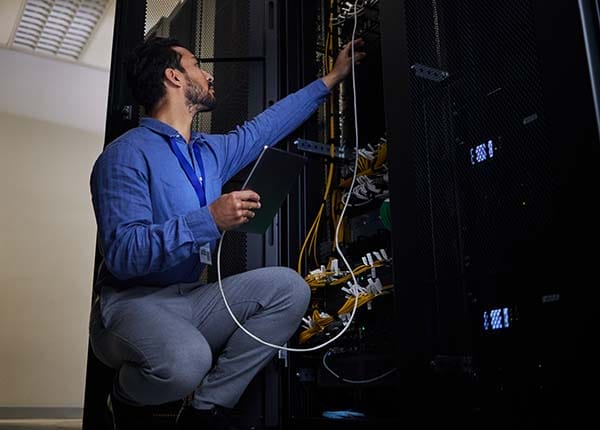
Backup & Disaster Recovery for Non-Profits
Losing donor records, grant documentation, or years of program data isn't just an inconvenience for a non-profit — it can threaten funding eligibility and erase the historical record your mission depends on. We run tested backups so that record stays protected no matter what happens to your primary systems.
Trusted by local businesses.
Trickster Cultural Center relies on us for donor data security and flat, budget-friendly IT support — the kind of coverage built specifically for non-profits balancing mission-first budgets with real security requirements.
Real businesses, real relationships.
“We’ve been using LME Services for our business IT support, and the experience has been fantastic. Their cybersecurity expertise, responsiveness, and ability to explain complex tech in plain English really set them apart.”

“I can’t say enough great things about LME Services. I’ve trusted them for years with my computer support needs. They are reliable, knowledgeable, and always willing to help.”

Common questions
Yes — plans are built flat and predictable specifically for non-profit budgets, not priced like a corporate contract.
Encryption and access controls are built around protecting donor payment information, with PCI-aware handling for online giving.
Yes — fast access provisioning and de-provisioning is built into the plan so departing volunteers and staff aren’t a lingering access risk.
Yes — clear documentation of our security practices is available to support grant and funder due diligence.
Your competitors are already using AI. Every week you wait, they pull further ahead.
While your team spends hours on email, quotes, scheduling and follow-up, the business down the street is letting AI handle the busywork. The AI Quick-Win Assessment shows you where AI will pay off in your business, which tools are safe for your data, and what to switch on first.
Example only: 5 hours a week for 48 weeks at $40 an hour. Your results depend on your team, tasks and tools. We estimate the numbers with you and never guarantee savings.
A 45-minute conversation about where your hours and dollars go: email, quotes, scheduling, follow-up and reporting.
A short report with quick wins ranked by impact and effort, real tool prices, estimated hours saved and the risks to avoid.
A 30-minute review call and a four-day starting plan, about 10 to 15 minutes a day. We can set it up for you or train your team.
Questions about your IT? Call 847-496-5196 or get a free IT assessment.